Visited 12.-13.7.2014 by jonahi. Whaling is a topic that nowadays makes almost everyone feel disgusted and shocked: how can anyone possibly kill those magnificent, intelligent sea mammals, that are also highly endangered? Past is past, and still some traditionally living populations by the Arctic Ocean depend their daily lives on whale-hunting, but what I cannot understand is how some industrialized countries still continue to do this with no real need.
Small-scale whaling started in Portugal in the 12th century, but the commercial land-based whaling industry was going on for only 89 years in the shores of Portugal in the 20th century, and in this time it managed to destroy the populations of the great whales. There were two main periods of whaling on the mainland shores, in the years 1925-1927 and 1944-1951. This whaling base I visited was probably used in one or both of these periods. The whaling industry on the mainland coast, however, was small compared to the islands of Azores and, less so, Madeira. However, it was far more operational, using steam boats and deck-mounted cannons shooting explosive harpoons, while on the archipelagos, the whaling was more traditional-style using open oar or sail boats and hand harpoons. Portugal was not the only country whaling on these waters; also hunters from Spain, Morocco and United Kingdom were operating here, but the statistics do not tell anything about these concurrent whalers. Whaling began to decline only after the exploited whaling grounds started to be empty of whales and the catches were smaller in number and size. The last whales were hunted in 1987 in Azores, with only 3 whales being caught. The species hunted in the Portuguese mainland coast were mainly sperm and fin whales, the latter being more important catch. These species haven't recovered since.
I found a good article about land-based whaling in Portugal, so if you are further interested in this topic, click here to read the article by C. Brito. I used it as a source of this blog post as well.
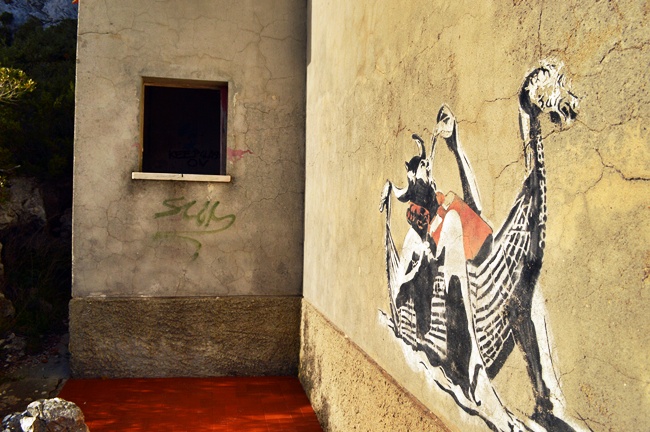
I felt very controversial while camping overnight on this whaling beach that is accessible only by boat or a canoe. On the other hand it was situated in a beautiful, naturally rocky bay that had a floor of shiny white pebbles. On the other, the sad history of the place made it somewhat gloomy, especially in the light of the full moon shining brightly from the sea and painting shadows on the rocky walls. I spent the night in a tent that was set up inside the now roofless shelter of the whale-hunters. Just next to it was the slot to where the whales were dragged from the sea after being caught. Now the slot was growing bushes, and I didn't want to know what had once been under them. There wasn't anymore any sign of all the blood that had once stained the place, but I just couldn't stop thinking about it. Anyway, the hunters staying in this base probably were just normal people doing their job to make a living for their family, without a full understanding on how they were affecting the whale populations. And we have to remember that many of our daily acts of Western lifestyle combined actually do the same for many species, it just more hidden and doesn't feel so brutal.